Find your Louisiana people. In the records.
Creole, Cajun or Isleño, the story of your family is written down somewhere: in a parish register, a ship list, a land grant, a census page. This kit shows you where your people came from, which names to look for, and exactly how to find them.
You told us whose great-grandchildren you are.
Under our Louisiana videos, thousands of you wrote a grandmother’s name, a parish, a spelling, a family story. And the same question, again and again: how do I find out more?
A video can tell a story. It can’t hand you the names, the records and the method. So we wrote it all down.
“This story is about my 9th Great grandmother!!! CoinCoin and Thomas Metoyer. She was born in 1742… I am a Descendant of this family.”
Top comment (584 likes) on The Louisiana Creoles Were Never What We Thought“My wife’s family is Breaux, there is a museum in Nova Scotia that has the Breaux lineage recorded there, with the name spelled several different ways.”
Comment on The Cajuns Were Never What We Thought“I’m a Robichaux from New Iberia, Louisiana. My dad spoke fluent Cajun French and I wish I’d have learned it.”
Comment on The Cajuns Were Never What We Thought“I am from Louisiana. Many people have the misconception that Creole is light-skin only.”
Comment (352 likes) on The Louisiana Creoles Were Never What We ThoughtReal records, not AI pictures
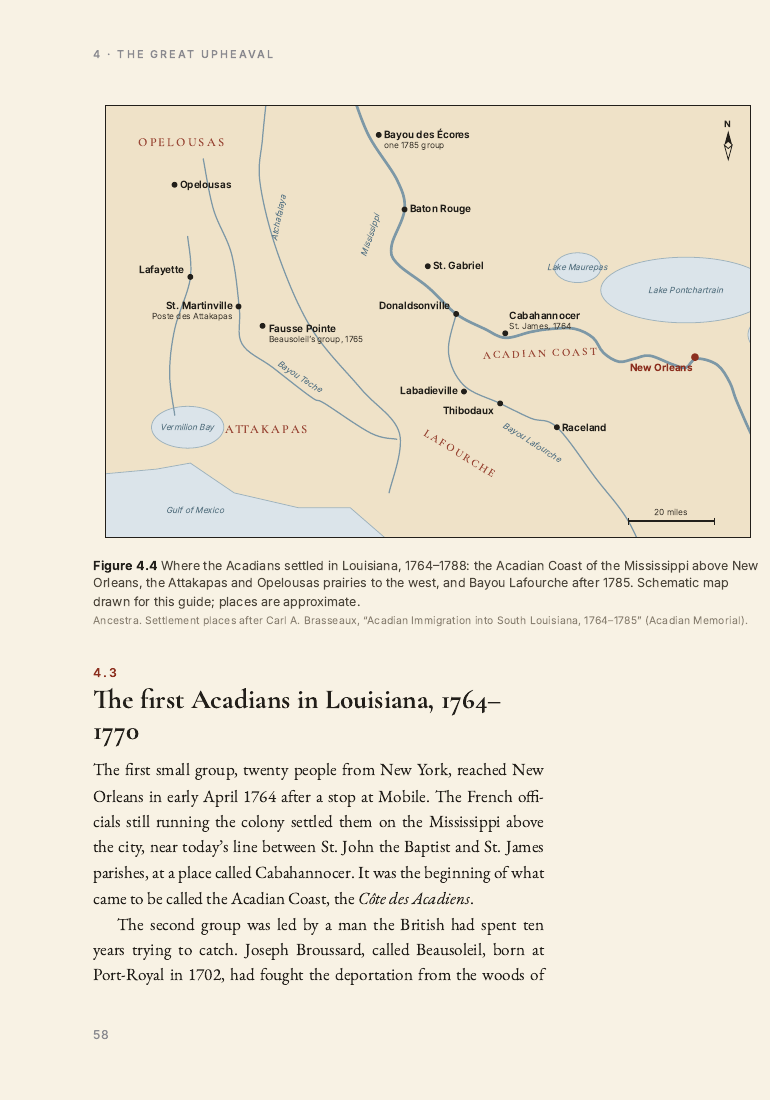
51 archival maps, registers, paintings and photographs, each one credited, plus gilded engravings made for the kit.
Your family names
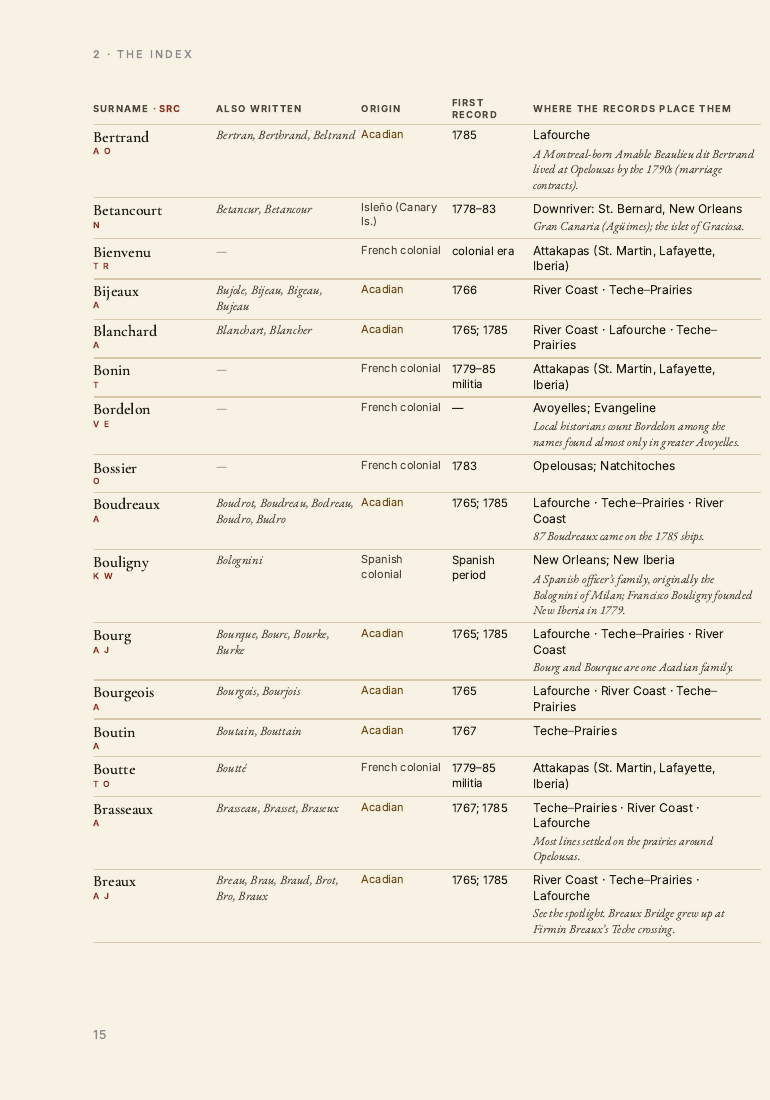
310 Louisiana surnames with every spelling, where each family came from and the parishes where it settled.
The method, step by step
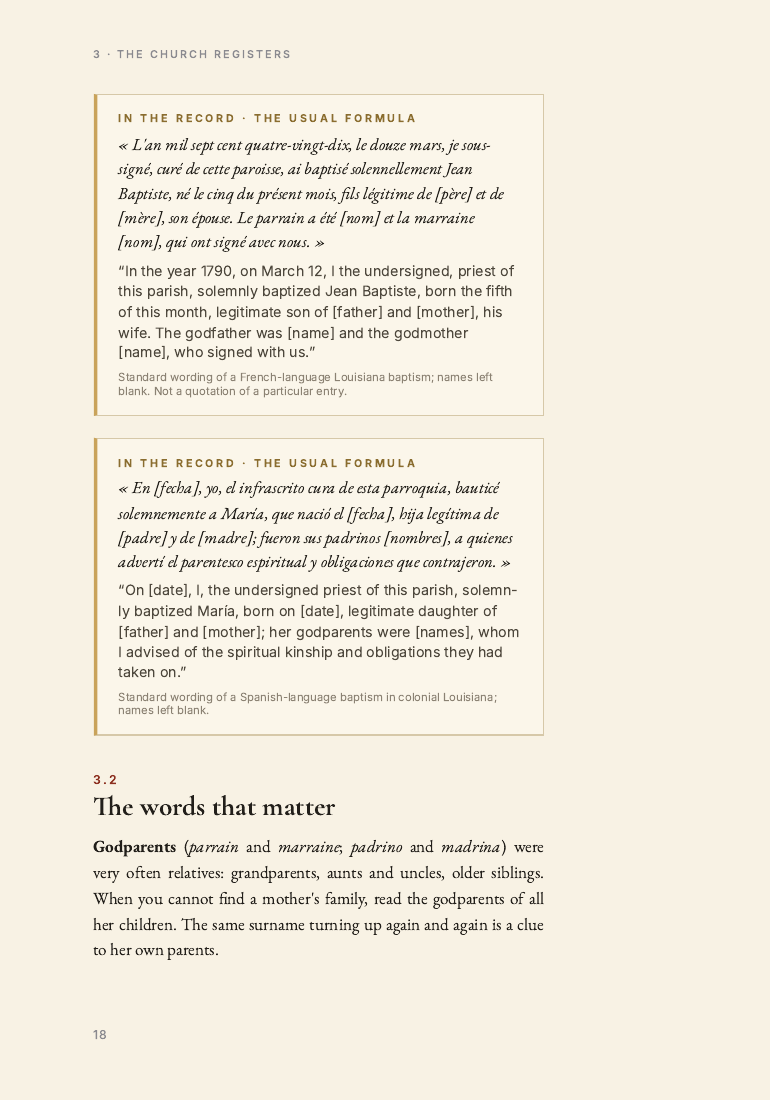
Which records exist for Louisiana families, where they are free online, and how to read a 1790 baptism entry.
A keepsake to pass on
Fillable family charts and 40 questions to ask your oldest relative, before the stories are lost.
Made like a family history worth keeping.
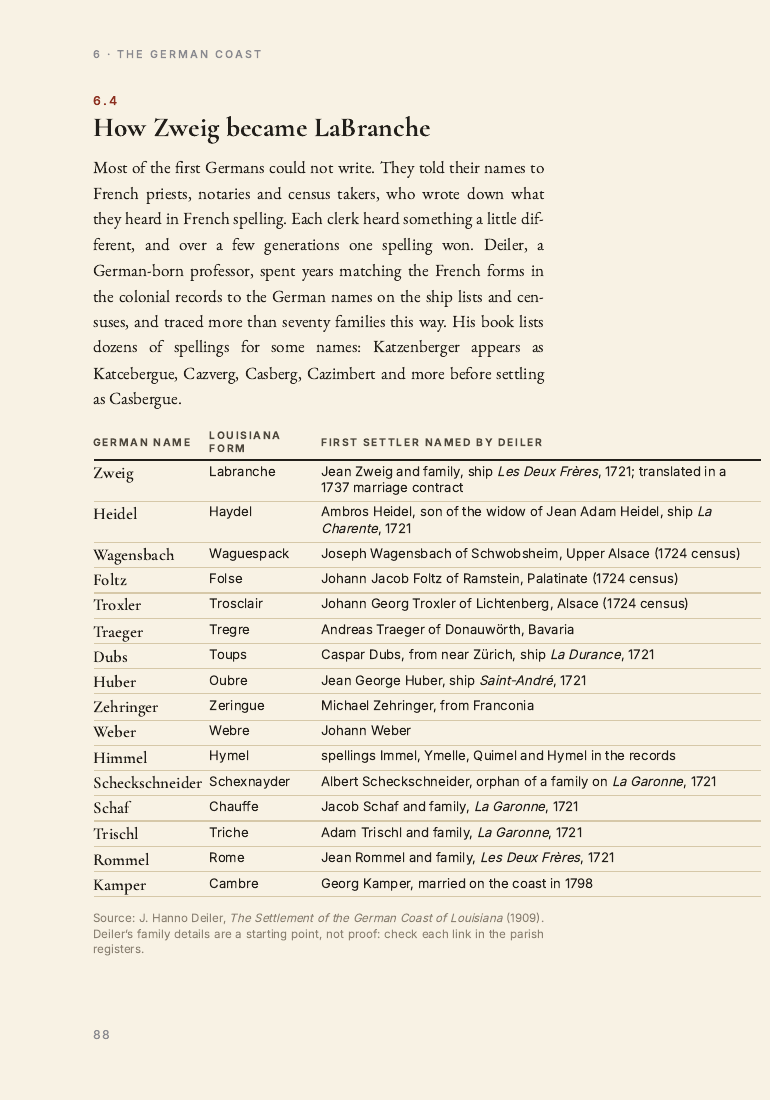
Real pages from the kit. Classic book typography, real archival documents, and gilded engravings made for these pages.
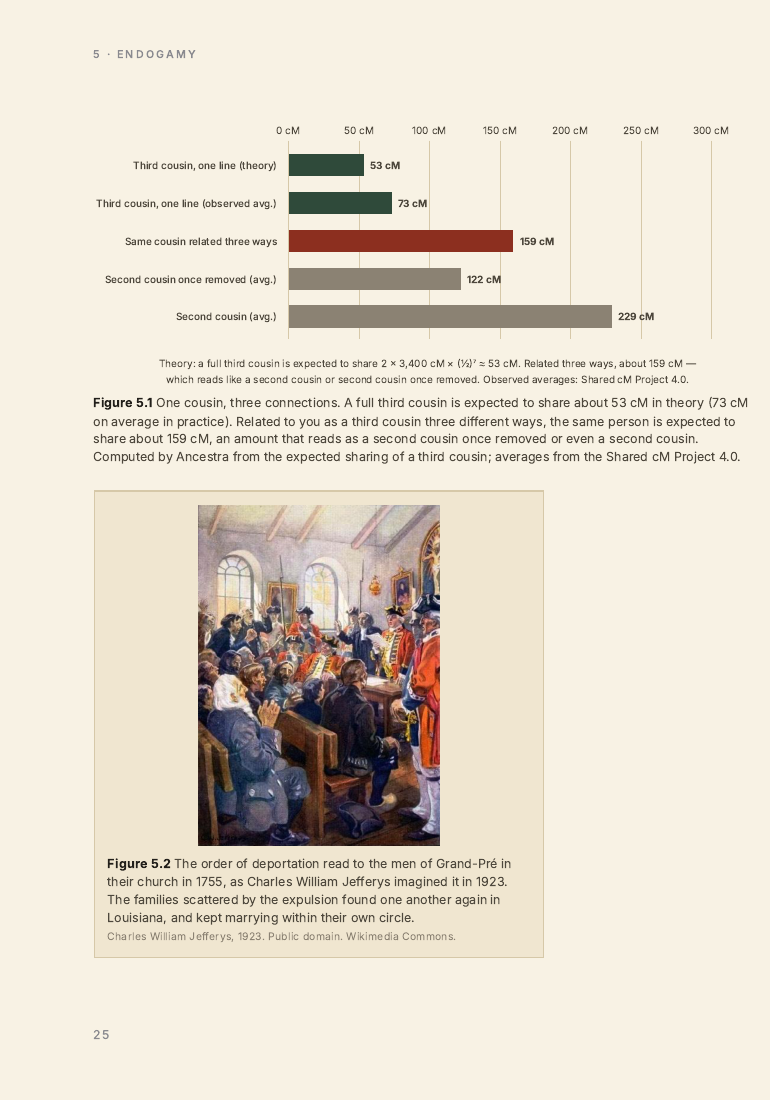
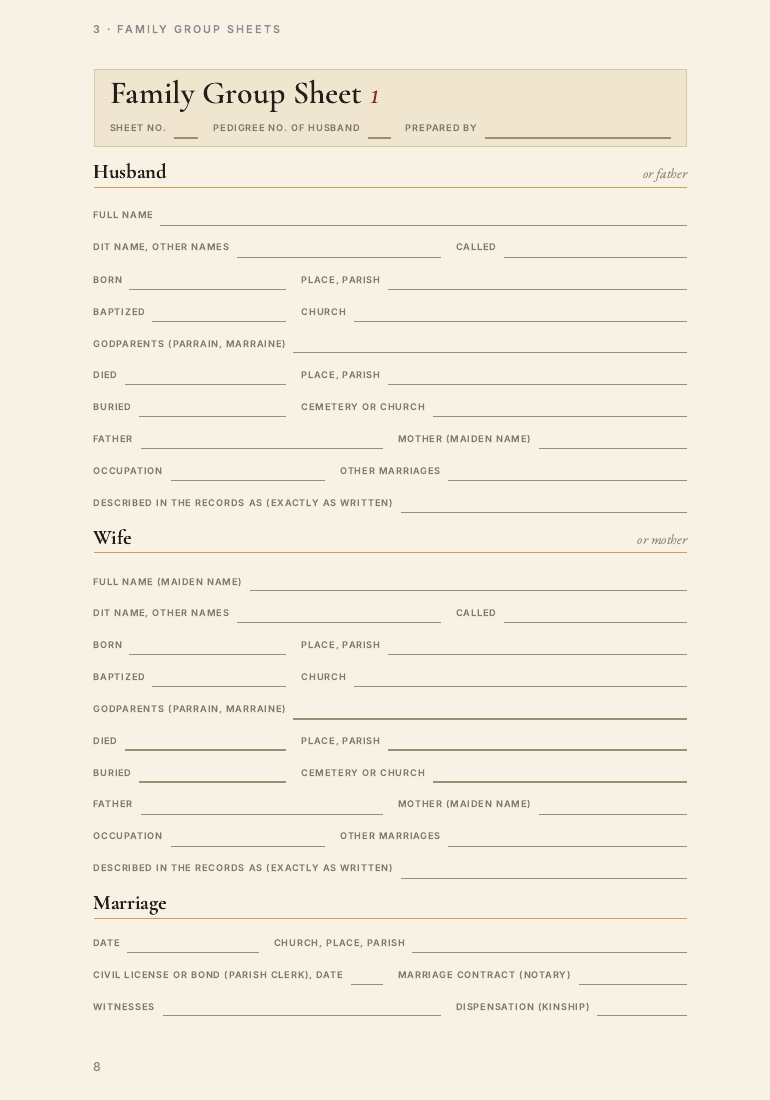
Five parts. One search.
Read the history, look up your names, follow the records, check your DNA, and write it all down.
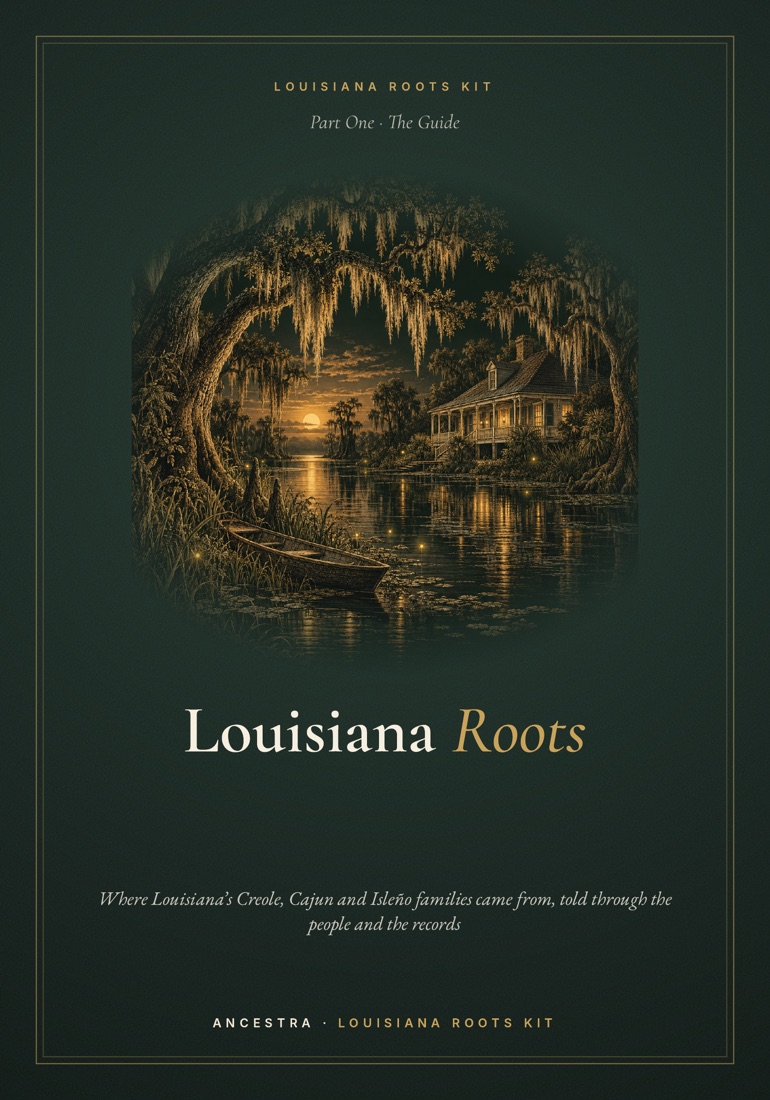
The Guide
Where Louisiana’s Creole, Cajun and Isleño families really came from, told through real people and real documents.
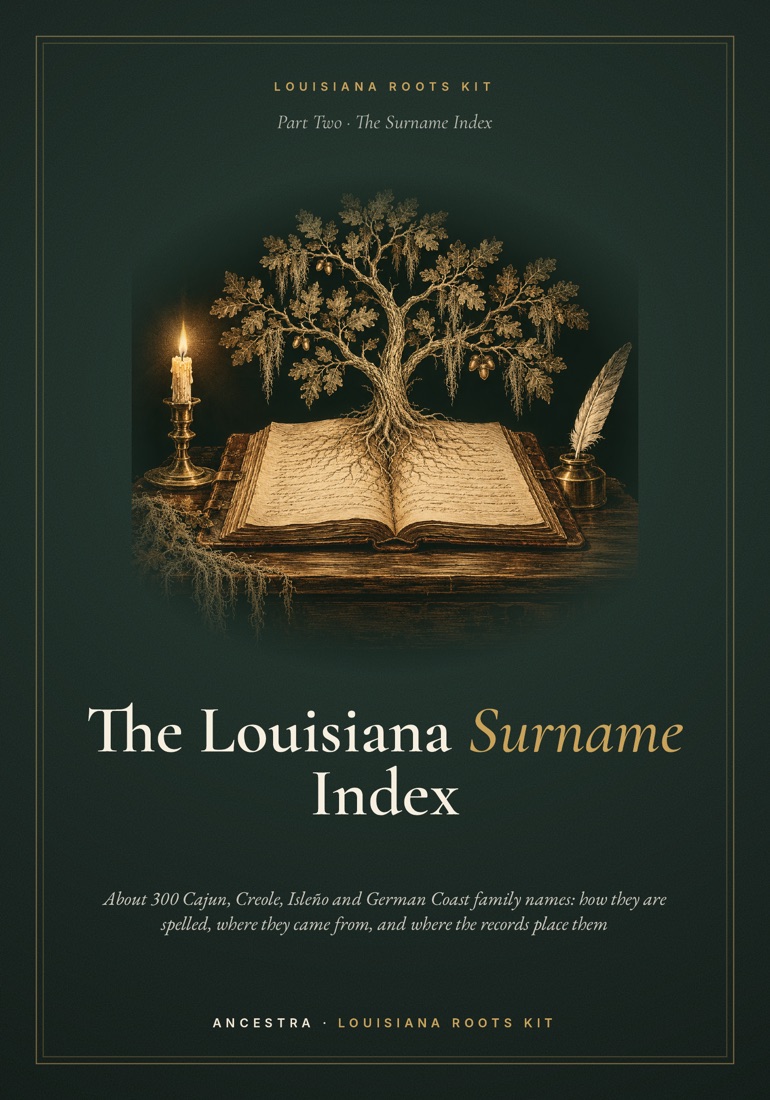
The Surname Index
310 family names with spelling variants, origins and the parishes where each family settled.
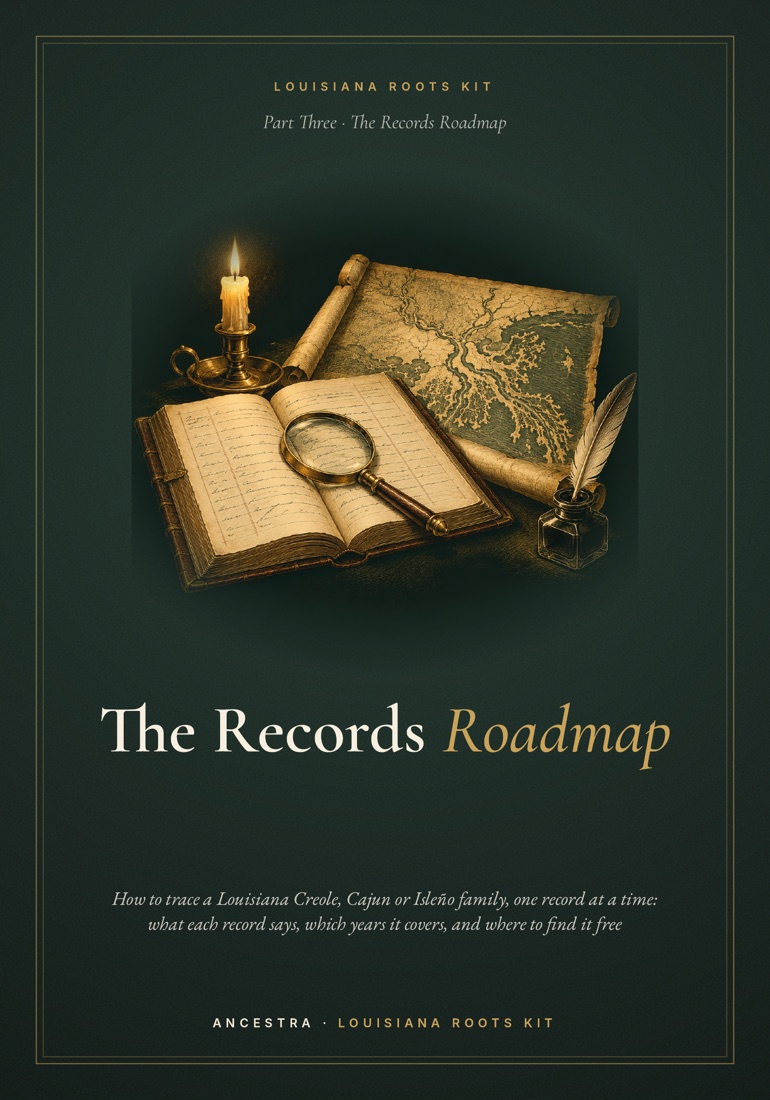
The Records Roadmap
Church registers, censuses, land grants, ship lists: what each one holds, where it is free online, how to read it.
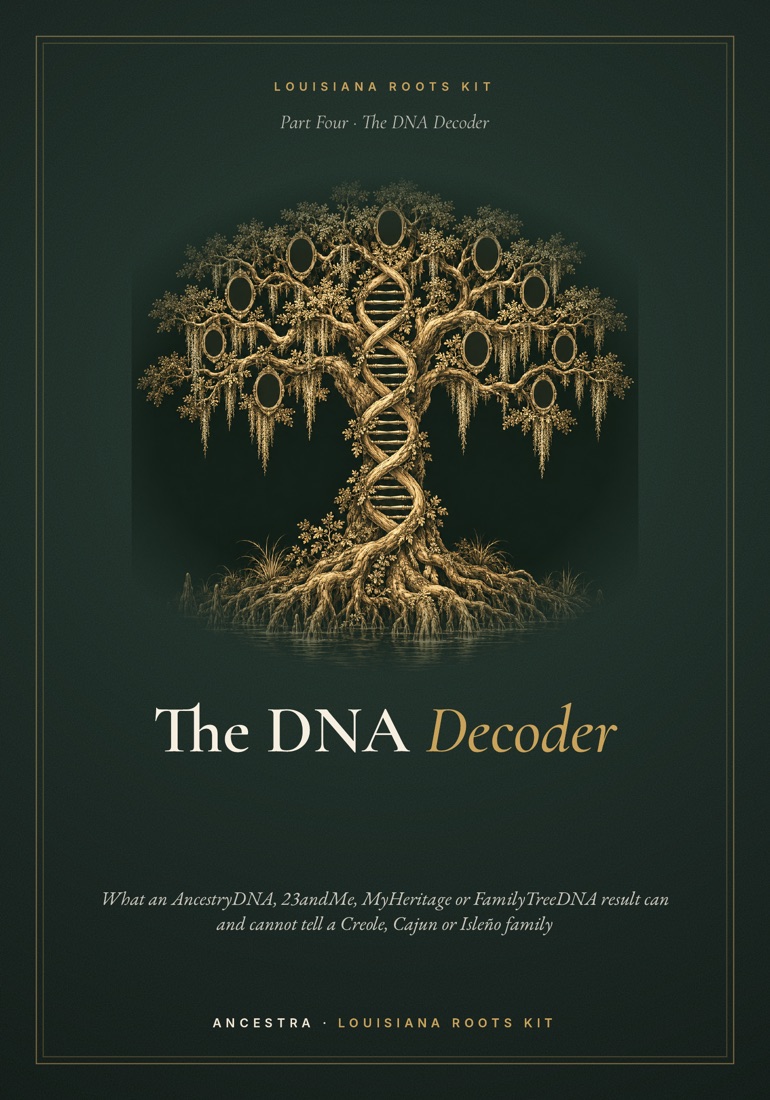
The DNA Decoder
What your Ancestry or 23andMe result can and can’t say about a Louisiana family, including why Cajun cousins look closer than they are.
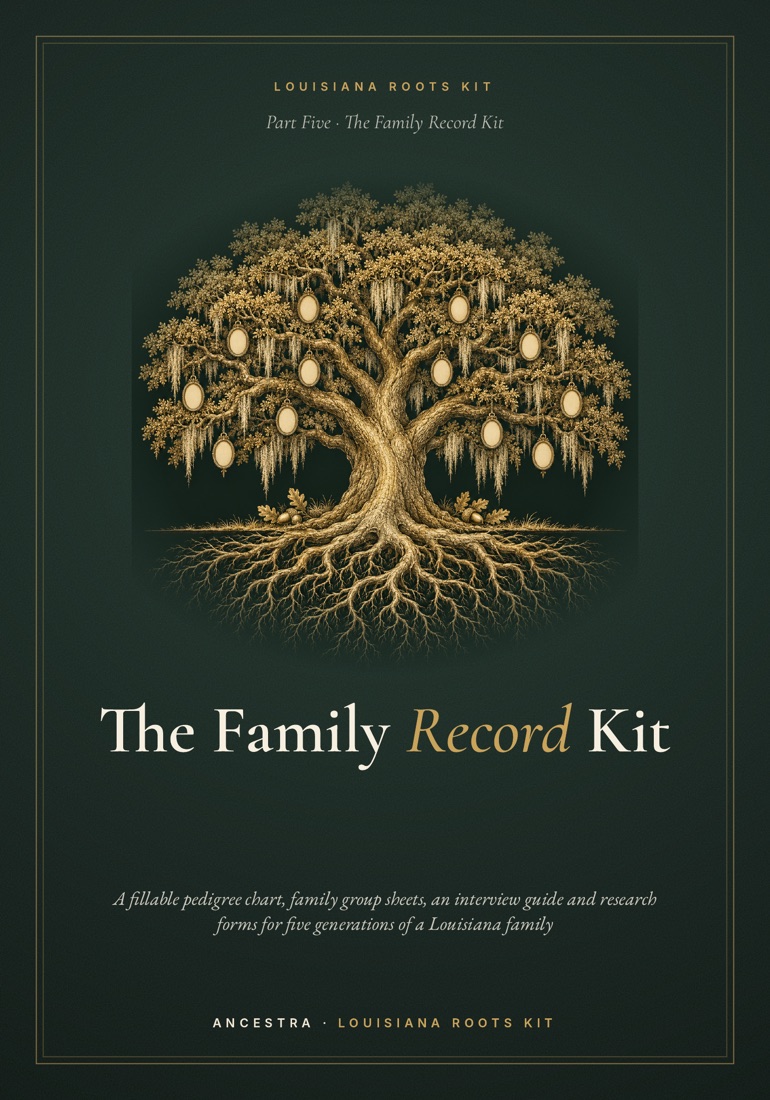
The Family Record Kit
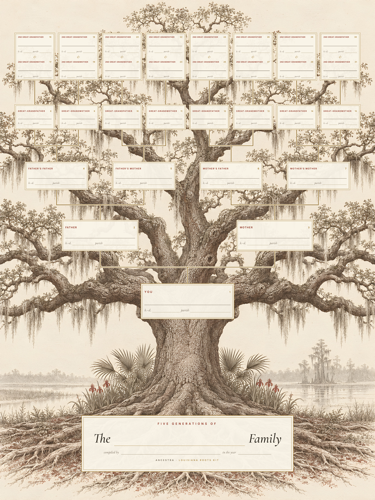
Fillable family tree, family sheets, a research log and 40 questions for your oldest relative.
The Louisiana Roots Kit
- Part One · The Guide (162 pages)
- Part Two · The Surname Index, 310 names
- Part Three · The Records Roadmap
- Part Four · The DNA Decoder
- Part Five · The Family Record Kit (fillable PDFs)
History you can check for yourself.
Every chapter is built on the maps, registers and images of the time, credited and dated, so you can find them again.
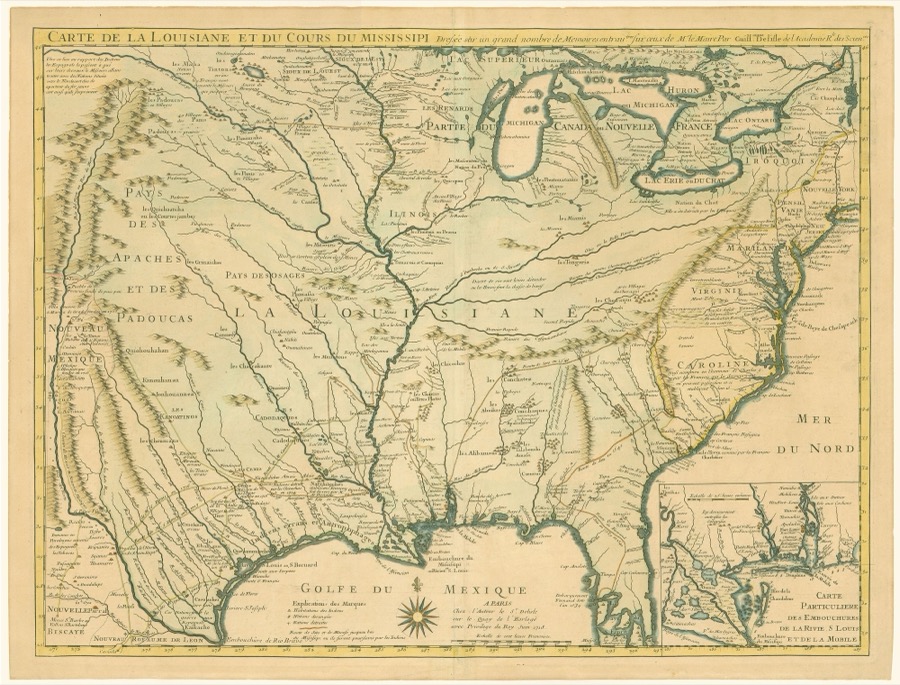
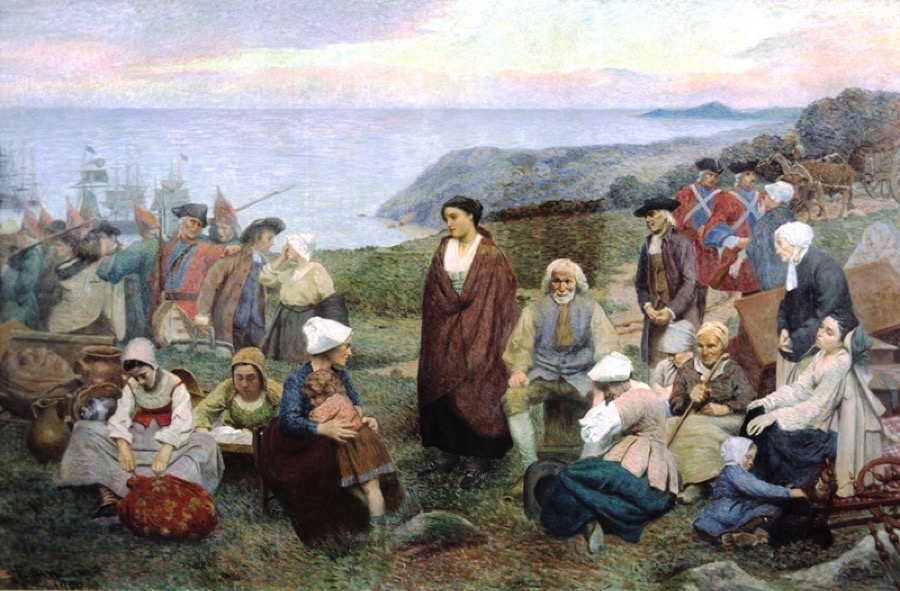
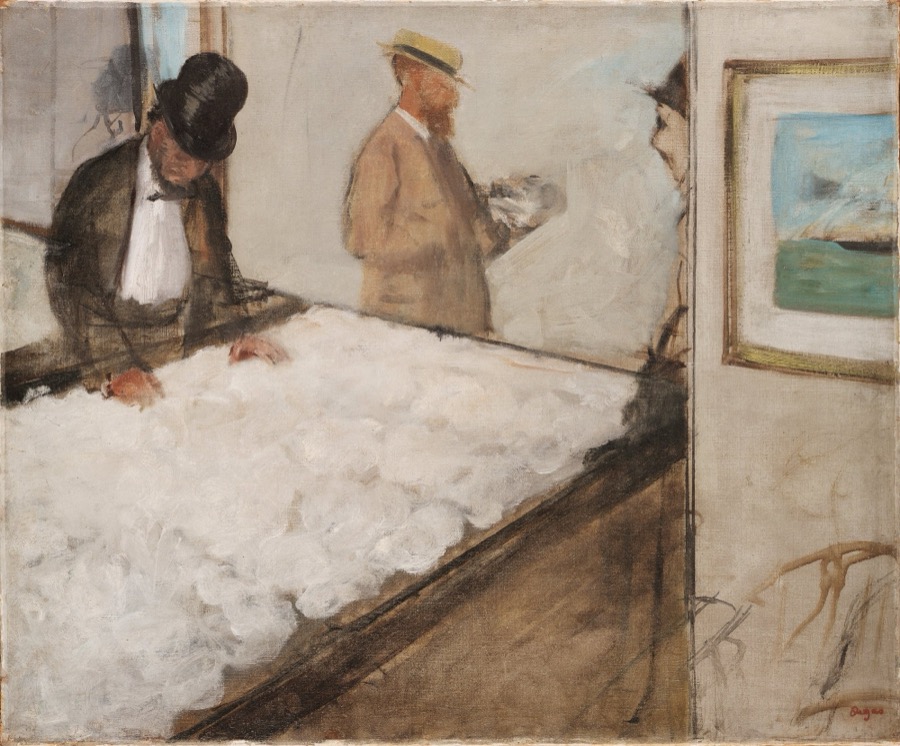
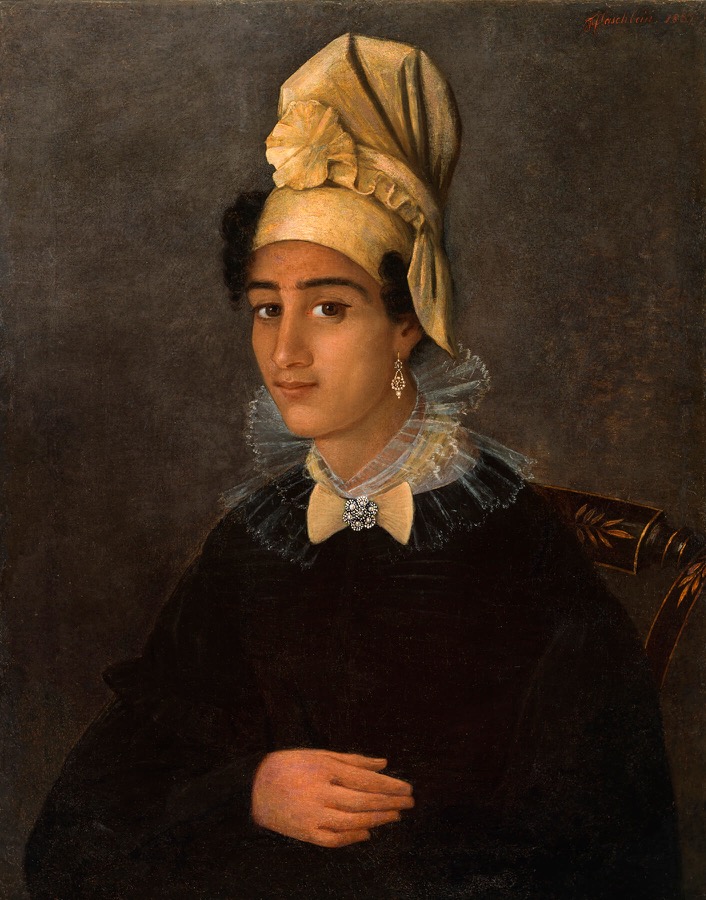
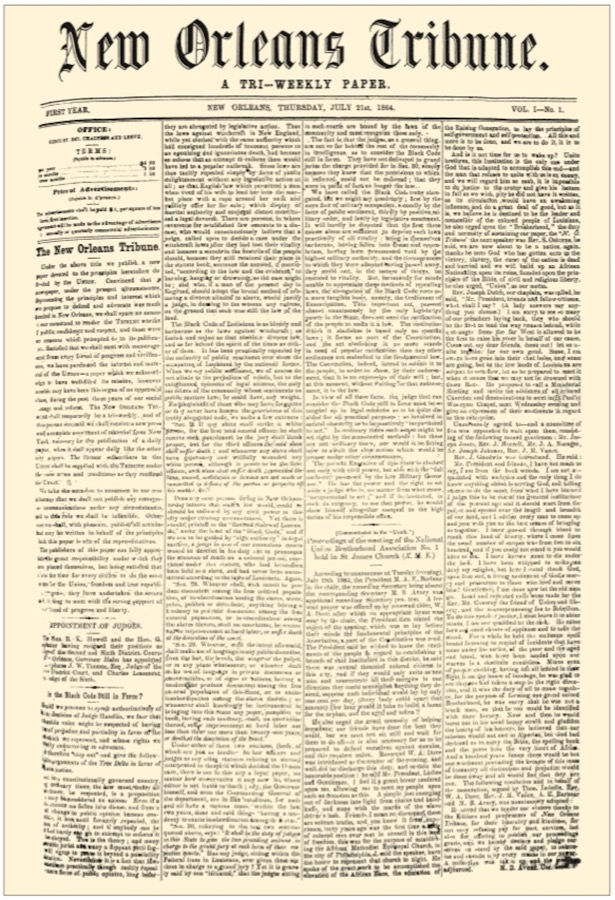
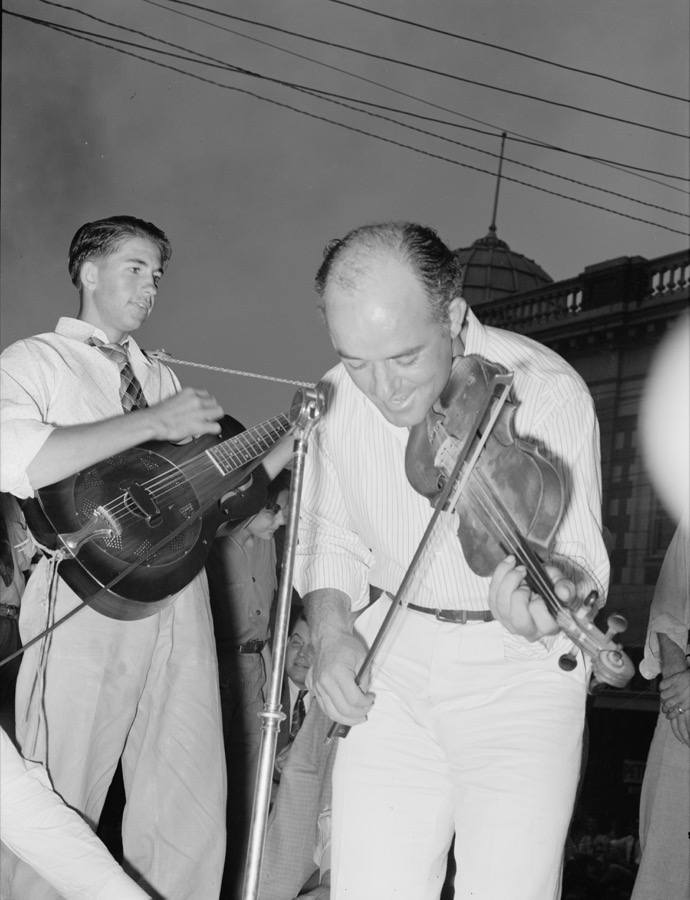
Every chapter of Louisiana Roots.
- The Word CreoleWhat Creole and Cajun meant in 1720, 1820, 1920 and today.
- New France on the GulfIberville, Bienville and the first settlers, 1699–1763.
- Africa in LouisianaSenegambia, the Code Noir, Congo Square and the Hall database, 1719–1811.
- The Great UpheavalThe Acadian exile, 1755–1785, and the making of the Cajuns.
- Spanish LouisianaIsleños, Malagueños, land grants and coartación, 1763–1803.
- The German CoastJohn Law’s Germans, Frenchified names, and the 1811 uprising.
- Free People of ColorCoincoin and the Cane River Metoyers, New Orleans' gens de couleur libres, and the f.m.c. in the records.
- The Saint-Domingue Refugees1791–1810: from Saint-Domingue through Cuba to the New Orleans levee, in three equal thirds.
- Becoming American1803–1921: statehood, the Native Guards and the Tribune, Plessy v. Ferguson, the one-drop rule and English-only schools.
- Still HereCODOFIL, the Cajun and Creole revivals, zydeco, what DNA studies show, and your next step in the kit.
For every family that calls Louisiana home.
This kit is for you if…
- Your family is Creole (of any color), Cajun, Isleño or from the German Coast, or you think it might be
- You have names and stories from a grandparent and want to know what is true
- You took a DNA test and don’t know what the results mean for a Louisiana family
- You want to record your family for your children before the stories are lost
It’s not for you if…
- You want a ready-made family tree: the kit teaches you to find your own people
- You want DNA to “prove” a tribe or a race: it can’t, and we explain why
- You only want a summary of the videos: the kit goes much further
When we made our first video about the Louisiana Creoles, we expected a few hundred comments. Instead, thousands of you wrote back with your families: the ninth great-grandmother on Cane River, the Breaux name spelled four ways, the mother who spoke Creole and never taught it.
Many of you asked the same thing: where do I start? Louisiana has some of the richest family records in America, from French and Spanish church registers to the 1785 Acadian ship lists. But they are scattered, written in old French and Spanish, and hard to read without a guide.
So we built the kit we wished existed: the history told properly, with the real documents; the names with all their spellings; and the method to find your own people in the records. We checked every name, date and source.
If it doesn’t help you find your family, tell us within 30 days and we’ll refund you. No questions.
Read it all. Then decide.
Download the kit and use it. If it isn’t what you hoped for, reply to your receipt email within 30 days and you’ll get every cent back.
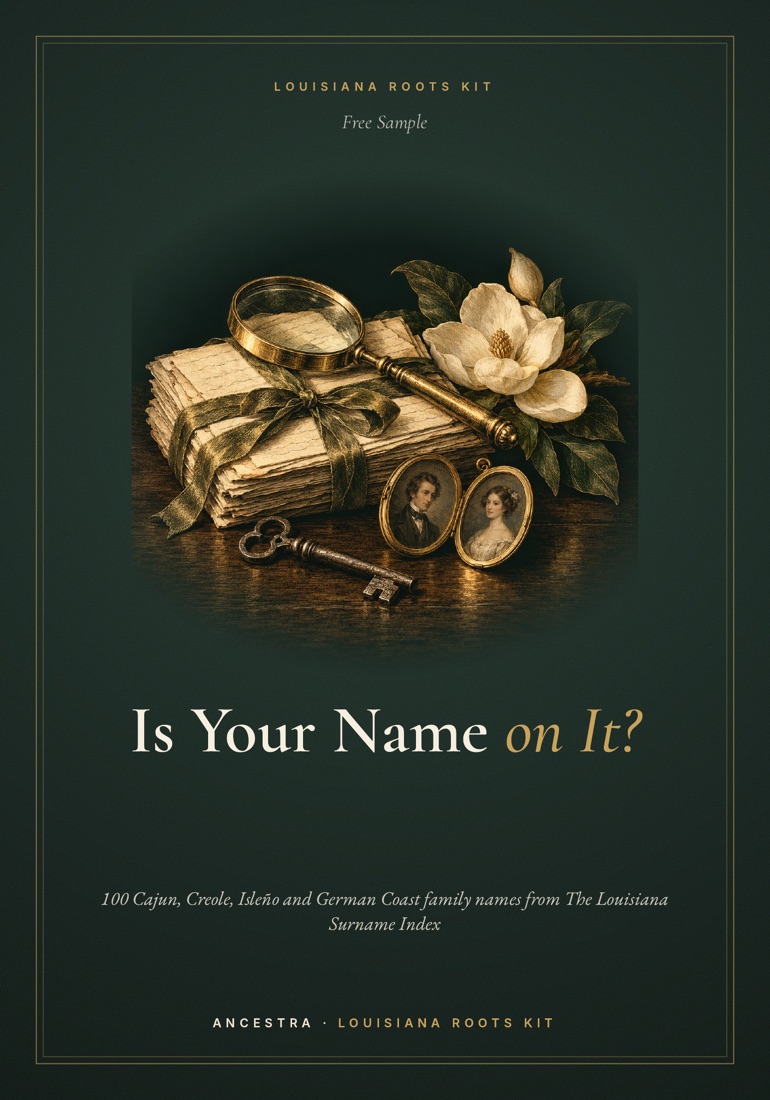
Is your name on it?
100 of Louisiana’s most common Creole, Cajun and Isleño family names, with their spellings, origins and parishes. Free, from the Surname Index.
Download the free list (PDF)Common questions
Is this for Creoles of color too?
Yes. Louisiana Creole history is the history of French, Spanish, African and Native people together, and the kit covers free people of color, enslaved ancestors and the records that name them, with the same care as every other family.
What is the difference between Cajun and Creole?
Cajuns descend from the Acadians exiled from Nova Scotia in 1755–1785. Creole has meant different things in different centuries, from “born in the colony” to a culture shared by people of many colors. Chapter 1 of the Guide tells the whole story.
Do I need a DNA test?
No. Most of the kit is about records, which go back further and say more than DNA. If you have tested, the DNA Decoder explains what your results can and can’t tell you.
Can the kit prove Native American ancestry?
No kit or DNA test can prove membership in a tribe. Many Creole families have real Native ancestors; the Records Roadmap shows how to look for them in colonial and church records, and the Decoder explains what DNA can and cannot show.
What format is it?
Five PDFs you download right after checkout. They read beautifully on a tablet or computer and print well. The Family Record Kit and the poster are fillable: type into them on screen, or print and write by hand.
My family isn’t on the surname list. Is it still useful?
Yes. The Index covers about 310 families, but the Guide, the Roadmap and the Decoder work for any Louisiana family. Try the free “Is your name on it?” list first.
Who made it?
The Ancestra team, who make the AncestraUS YouTube channel. Every name, date and record was checked against published sources, which are listed in each part.
What if I don’t like it?
Reply to your receipt email within 30 days for a full refund. No forms, no questions.
Your people are in the records. Go find them.
Five parts, 352 pages, 310 family names, and the method to trace your own.
Get the kit · $37Secure checkout · Instant PDF download · 30-day money-back guarantee